

Significant jaw misalignment can affect essential functions such as chewing, speaking, and even breathing, while also impacting overall facial balance. In cases where the underlying issue is skeletal rather than dental, orthodontic treatment alone may not be sufficient to achieve the desired functional and aesthetic outcome.
Orthognathic surgery, commonly known as jaw surgery, is a specialized treatment approach used to correct these structural conditions. It focuses on repositioning the jawbones to improve bite alignment, restore proper function, and enhance facial harmony.
Dentique connects patients with experienced maxillofacial specialists in accredited hospitals in Turkey, offering access to advanced surgical planning and treatment pathways designed to ensure precision, safety, and long-term stability.
Orthodontic treatments are effective for shifting teeth around. But they have zero power to physically move or reshape your underlying jawbones (the maxilla and mandible). If your core problem is skeletal, it translates into real, annoying functional problems that can affect daily function and quality of life and create severe imbalances in your face.
Expect this part to last roughly 9 to 18 months. The orthodontist uses braces to push your teeth into the perfect final position relative to their own jaw, temporarily making the skeletal problem look much worse. Why? Because this crucial alignment guarantees that the moment the surgeon lines up your jawbones, the top and bottom teeth will land and mesh perfectly.
This is where cutting-edge technology truly shines.
The actual procedure is carried out under general anesthesia at a major private hospital.

Choosing Dentique for jaw surgery means you automatically benefit from a seamless system built for complex procedures:
No, absolutely not. The primary reason is always to dramatically improve function things like proper chewing, stable breathing, and correcting the bite. The gorgeous improvement in facial balance is just a fantastic secondary reward.
Yes, usually. It’s a mandatory partnership. You wear braces before surgery to correctly position the teeth, the surgery then moves the jawbones, and you wear the braces for a few months after surgery to precisely fine-tune the final bite.
The time at the operating table typically runs between 2 and 4 hours, depending entirely on whether we are moving just one jaw (single) or both jaws (double jaw surgery).
No. Our surgeons perform nearly all the cuts and repositioning entirely inside your mouth (intraoral incisions), which means you have zero external, visible scars on your face.
Patients usually need to stay in the hospital for 1 to 3 nights so we can monitor them closely and manage initial discomfort effectively.
Get ready for liquids! You will be on a strict liquid diet for the first few weeks to protect the newly healing bones. You slowly move to very soft foods, with a return to a normal diet usually taking around 6 to 8 weeks.
While you can usually get back to work or school in about 2 to 4 weeks, the jawbones need about 6 weeks to consolidate completely. The final nerve recovery and total bone healing might take several months, sometimes up to a year.
Jaw surgery is a serious commitment, but it is the definitive, best path available to fix fundamental skeletal issues that affect your smile, your bite, and your health. By choosing the expertise and digital precision offered at Dentique, you are setting yourself up for improved function and comfort and a beautiful, genuinely balanced facial profile.
Ready to take the first, most important step in this transformative journey? Contact Dentique through our website or WhatsApp. The process typically begins with your essential 3D diagnostic planning.

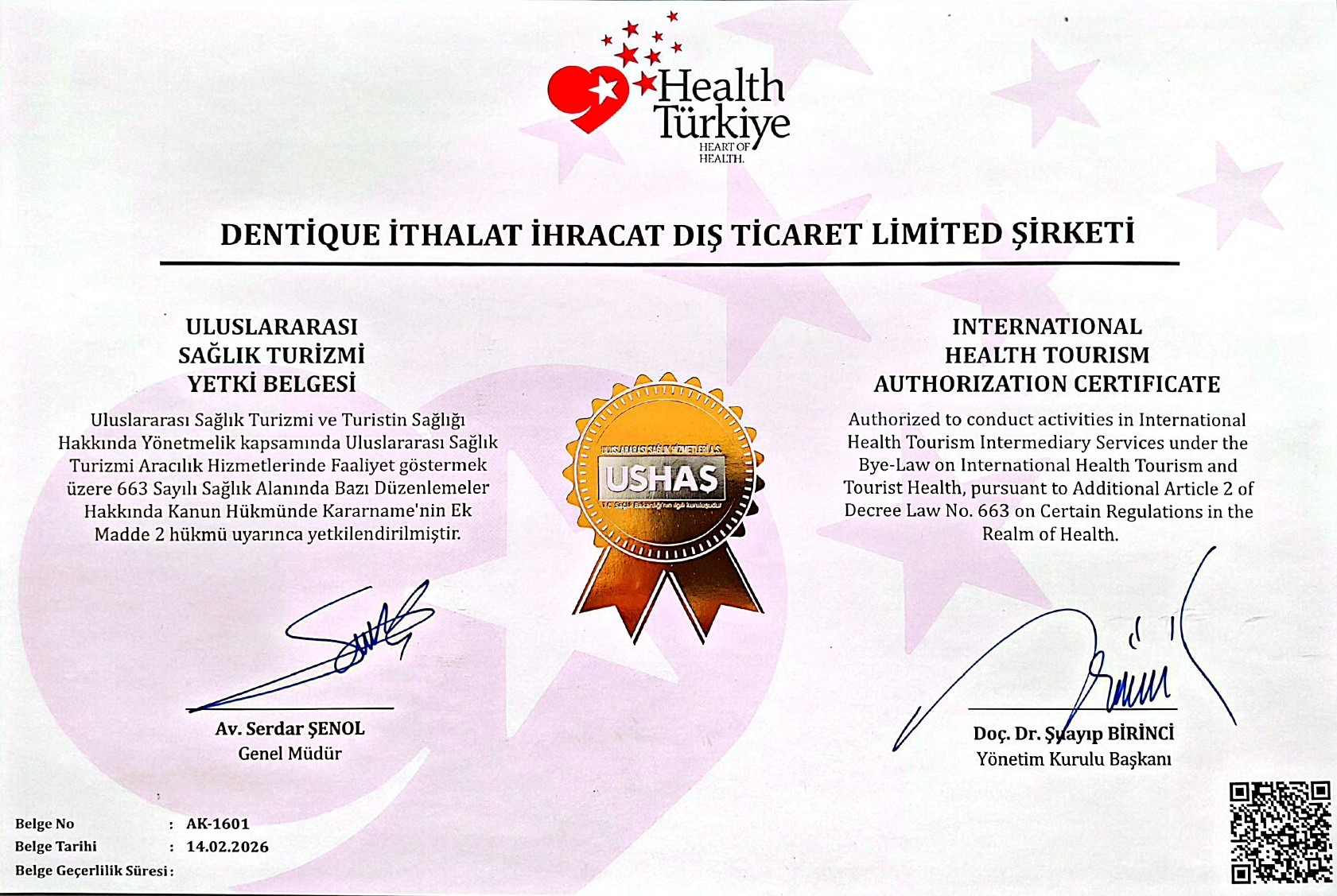
Dentique is a health tourism intermediary organization based in Istanbul, Turkey. Our treatment services are provided at contracted healthcare institutions with a health tourism authorization certificate, ensuring high-quality standards.

© Dentique 2025 All right reserved.